
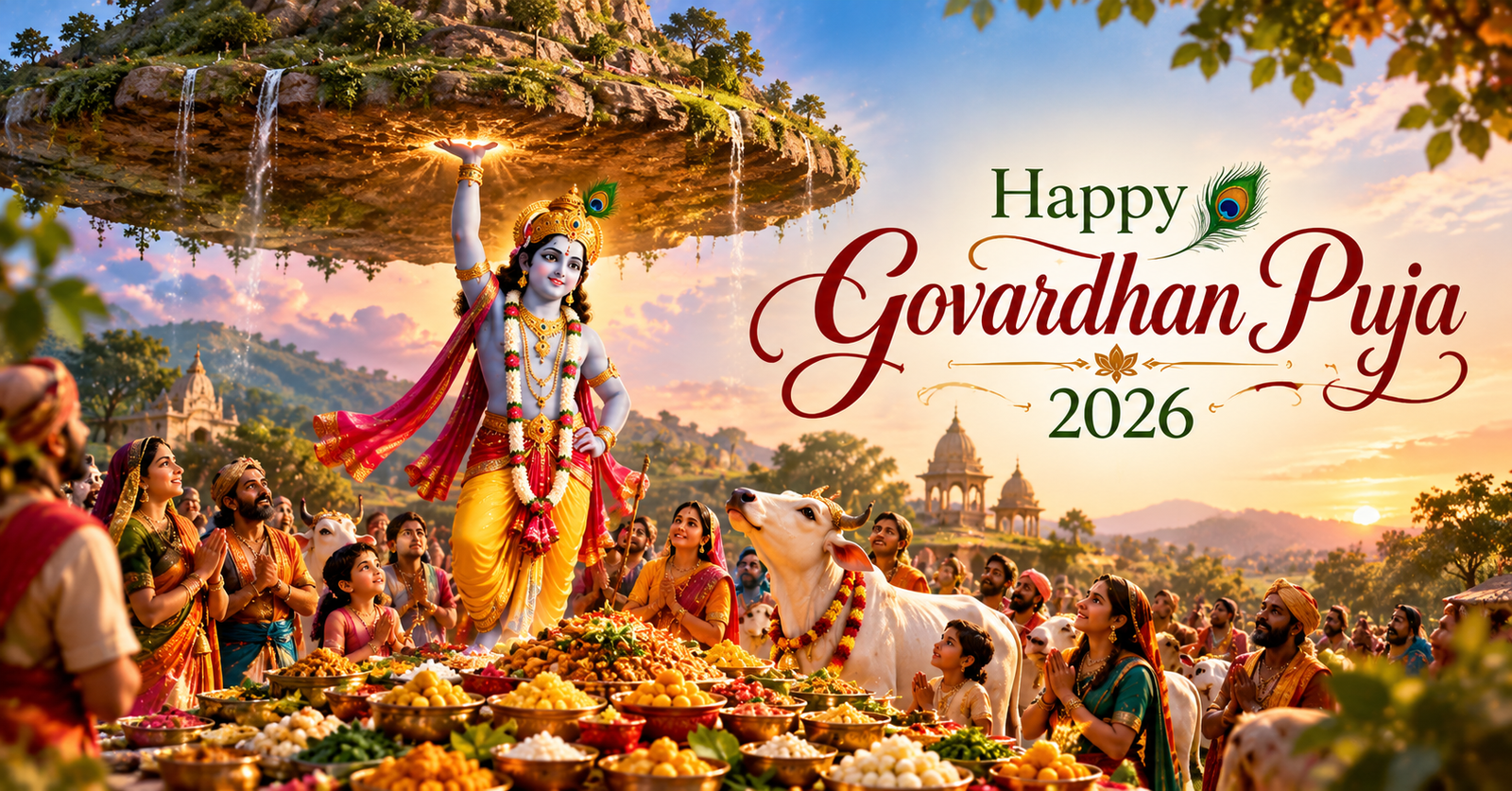

Govardhan Puja is an important Hindu festival dedicated to Lord Krishna. It celebrates the day Lord Krishna lifted Govardhan Hill to protect the people of Vrindavan from heavy rain and the anger of Lord Indra. The festival reminds devotees of the power of faith, humility, devotion, and the protection of nature.
Also known as Annakut Puja, the celebration is marked by special prayers, offerings of food to Lord Krishna, and worship of cows in many communities. Families and temples prepare a variety of dishes as an expression of gratitude for nature’s blessings.
In this article, let us explore the Govardhan Puja 2026 date, the story of Lord Krishna, its religious significance, and the traditional puja rituals.
When Is Govardhan Puja in 2026?
Govardhan Puja will be observed on Monday, November 9, 2026, in Mumbai, according to the city’s Drik Panchang calendar. Some other regional calendars, including the New Delhi Panchang, list the festival on Tuesday, November 10, because the Pratipada Tithi and local observance rules differ.
The festival is associated with the Pratipada Tithi of Shukla Paksha in the Hindu month of Kartik. It is generally celebrated around the time of Diwali and is an important part of the festive season.
Govardhan Puja 2026 Puja Muhurat
For Mumbai, the published evening puja muhurat is approximately 3:46 PM to 6:02 PM on November 9, 2026. Timings can differ by city and by the calendar tradition followed.
For the exact date and auspicious timings in your location, consult the Drik Panchang Govardhan Puja calendar.
Note: As festival dates may differ by region in 2026, check your local Panchang before planning the puja.
What Is the Significance of Govardhan Puja?
The festival celebrates Lord Krishna’s divine protection of the people of Vrindavan. It also teaches an important lesson about respecting nature and recognising the many blessings it provides.
According to Hindu tradition, Lord Krishna encouraged the people of Vrindavan to honour Govardhan Hill because it supported their lives by providing grass for cattle, land for farming, and resources for the community.
The main significance of this celebration includes:
- Devotion to Lord Krishna: Devotees remember his compassion and protection of the people of Vrindavan.
- Gratitude towards nature: The festival reminds us to respect the land, water, plants, and animals that sustain life.
- Food and abundance: Annakut offerings express gratitude for food and the blessings of a good harvest.
- Humility: The story teaches that pride and arrogance should give way to understanding and devotion.
- Cow worship: Cows are honoured in many communities because of their traditional importance in agriculture and Hindu culture.
The celebration encourages people to appreciate nature and live with gratitude, kindness, and humility.
The Story of Govardhan Puja
The most popular story associated with this festival comes from the life of Lord Krishna in Vrindavan.
Why Did Lord Krishna Lift Govardhan Hill?
According to Hindu tradition, the people of Vrindavan worshipped Lord Indra, the god associated with rain and storms, to seek good rainfall and prosperity.
When Krishna saw the preparations, he asked the villagers to worship Govardhan Hill instead. He explained that the hill, the forests, the land, and the surrounding environment directly supported their daily lives.
The people followed Krishna’s advice and offered prayers and food to Govardhan Hill.
Lord Indra became angry because he felt that the villagers had stopped honouring him. In response, he sent heavy rain and powerful storms over Vrindavan.
The villagers became frightened as the rain threatened their homes, cattle, and belongings.
How Krishna Protected the People of Vrindavan
Seeing the suffering of the villagers, Lord Krishna lifted the mighty Govardhan Hill on the little finger of his left hand.
He asked the people of Vrindavan to take shelter beneath the hill. The villagers, along with their families and cattle, gathered under it and remained protected from the storm.
Krishna held the hill for seven days, providing shelter until Lord Indra realised his mistake and stopped the rain.
The story is remembered as a lesson in divine protection, humility, and the importance of faith.
It also reminds devotees that nature deserves respect and that arrogance should never overcome wisdom.
Why Is Govardhan Puja Also Called Annakut?
The word Annakut means a mountain or heap of food. It refers to the tradition of preparing a large variety of dishes and offering them to Lord Krishna.
According to the traditional story, after Krishna protected the villagers, they expressed their gratitude by preparing food and offering it to him.
Today, many Krishna temples prepare elaborate Annakut offerings featuring sweets, rice dishes, vegetables, curries, breads, and other delicacies.
The food is offered to the deity and later distributed as prasad among devotees.
Annakut symbolises gratitude for the food we receive and the natural resources that make it possible.
How Is Govardhan Puja Celebrated?
The celebration varies across regions and families, but several customs are widely followed.
1. Worshipping Lord Krishna
Devotees clean their homes and prepare a prayer area with an idol or picture of Lord Krishna.
Flowers, incense, diyas, and traditional offerings are arranged for the puja. Many devotees sing bhajans, recite prayers, and seek Krishna’s blessings for happiness and protection.
In temples, the deity may be decorated with beautiful clothes, jewellery, and flowers.
2. Preparing the Govardhan Hill
In some households and communities, a small representation of Govardhan Hill is made using cow dung, soil, or other materials. It may be decorated with flowers, leaves, and small plants.
Devotees offer prayers to this representation as a symbol of the sacred hill associated with Krishna’s divine act.
The exact method varies by region, and some families worship an image of Govardhan Hill instead.
3. Preparing the Annakut Offering
Food is an important part of the celebration.
Families and temples prepare different dishes, including sweets, rice, vegetables, curries, and other traditional foods. These dishes are arranged as an offering to Lord Krishna.
After the prayers, the food is distributed as prasad and shared with family members or the wider community.
The tradition represents gratitude, generosity, and the joy of sharing food with others.
4. Performing Govardhan Puja
Devotees perform the puja according to their family or regional traditions.
The rituals may include offering flowers, lighting diyas, presenting food, reciting prayers, and performing aarti.
Some devotees also perform parikrama, or walk around a sacred place as an act of devotion. The Govardhan Parikrama in the Braj region is particularly significant for Krishna devotees.
5. Worshipping Cows
Cow worship is another important custom in many parts of India.
Cows may be bathed, decorated with flowers or colourful ornaments, and offered food. This tradition reflects their traditional importance in agriculture, dairy farming, and rural life.
The practice also connects with the story of Krishna, who spent much of his childhood among the cowherds of Vrindavan.
The Spiritual Message of Govardhan Puja
The story of Govardhan Hill offers several lessons that remain meaningful today.
Respect nature: The land, water, plants, and animals around us support our lives. Caring for them is an important responsibility.
Stay humble: The story of Lord Indra reminds us that pride can lead to mistakes. Wisdom begins when we are willing to learn and understand.
Have faith: Krishna’s protection of the villagers represents hope and trust during difficult times.
Share what you have: Annakut teaches us to express gratitude for food and share our blessings with others.
Value community: The villagers found safety together under Govardhan Hill. Their story highlights the importance of helping one another during challenging times.
These lessons make the festival meaningful beyond its religious rituals.
Govardhan Puja and the Importance of Nature
One of the most relevant messages of this festival is the connection between human life and nature.
Agriculture depends on healthy soil, water, rainfall, and the well-being of animals. The traditional story of Govardhan Hill highlights how these natural resources support entire communities.
In modern life, the same message encourages us to conserve water, reduce waste, protect green spaces, and treat animals with care.
Celebrating this occasion can be an opportunity to appreciate the environment and make small, positive changes in our everyday lives.
Govardhan Puja in Mathura and Vrindavan
Mathura and Vrindavan hold a special place in the celebration because of their close association with Lord Krishna.
Temples in the Braj region organise prayers, bhajans, special darshan, and elaborate Annakut offerings. Devotees also visit sacred places connected with Krishna’s childhood.
Govardhan Hill itself is an important pilgrimage site. Many devotees undertake the Govardhan Parikrama, walking around the hill as an expression of faith and devotion.
During the festive period, the region attracts Krishna devotees who come to participate in the celebrations and seek the blessings of the deity.
Conclusion
Govardhan Puja is a festival of devotion, gratitude, and respect for nature. The story of Lord Krishna lifting Govardhan Hill reminds us that true strength lies in protecting others, staying humble, and caring for the world around us.
Through Annakut offerings, prayers, cow worship, and other traditions, devotees express gratitude for food, nature, and the blessings of life.
As we observe Govardhan Puja 2026, let us remember the message of Lord Krishna and make an effort to live with kindness, humility, and respect for all living beings.
May Lord Krishna bless every home with happiness, peace, prosperity, and protection.
People also read : Diwali 2026: Lakshmi Puja Date, Significance, Story and Rituals