
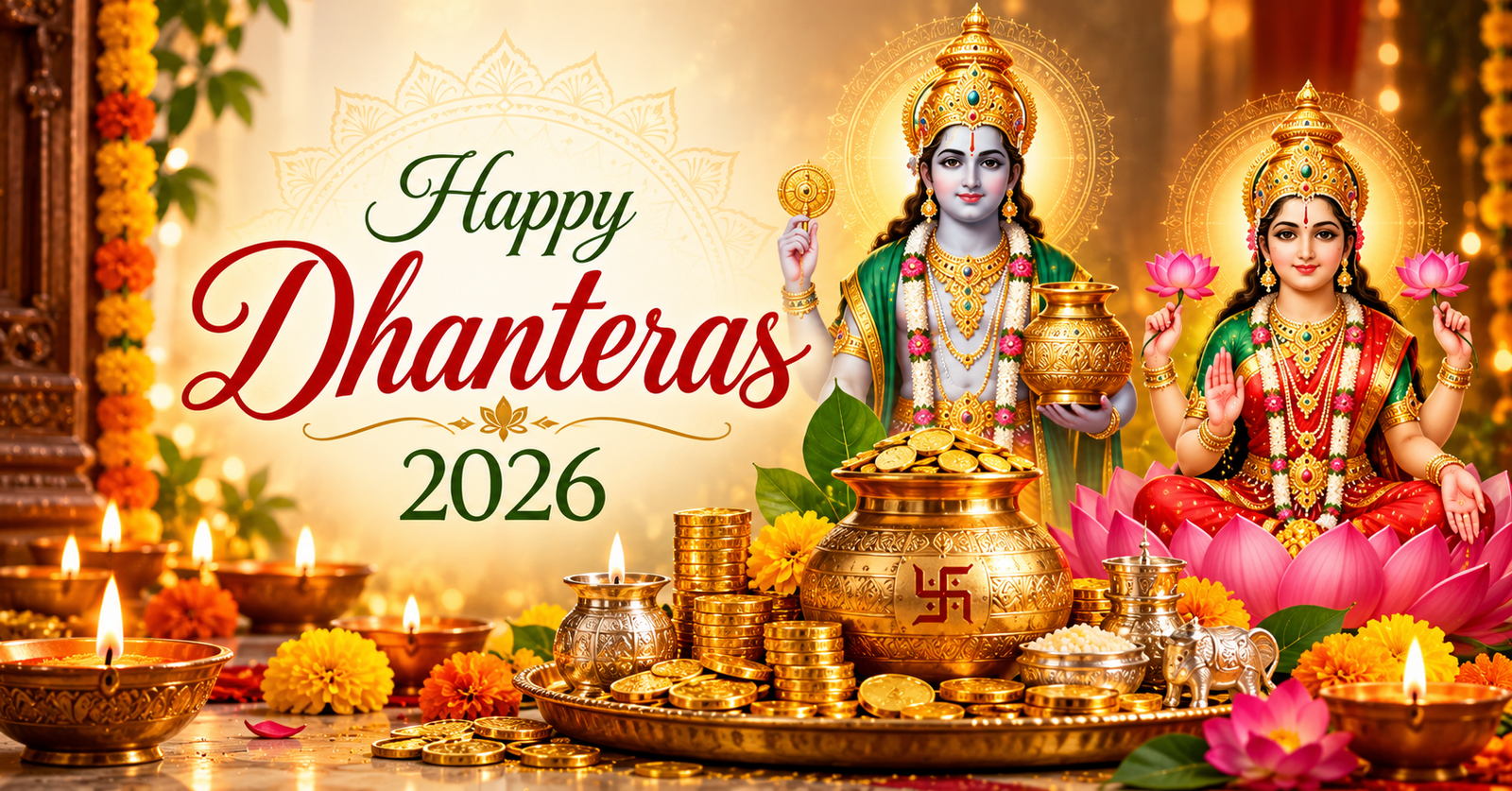

Dhanteras is one of the most important festivals celebrated before Diwali in India. It is associated with wealth, prosperity, good health, and new beginnings. On this day, people clean and decorate their homes, light diyas, worship Goddess Lakshmi and Lord Dhanvantari, and buy gold, silver, or new utensils as part of a long-standing tradition.
For many families, this festival marks the beginning of Diwali celebrations and brings hope for happiness, success, and prosperity in the coming year.
In this article, let us explore the Dhanteras 2026 date, its religious significance, the story behind the festival, and the traditional puja rituals.
When Is Dhanteras in 2026?
In 2026, Dhanteras will be celebrated on Friday, November 6, 2026.
Also known as Dhantrayodashi, this festival falls on the Trayodashi Tithi of Krishna Paksha in the Hindu lunar calendar. It is traditionally observed two days before Diwali and marks the beginning of the five-day Diwali festivities.
On this day, devotees worship Lord Dhanvantari, Goddess Lakshmi, and Lord Kubera. Many families also light a special lamp in the evening as part of their religious traditions.
Dhanteras 2026 Puja Muhurat
The puja is generally performed during Pradosh Kaal, the period after sunset. The exact auspicious time depends on the location.
For the correct puja muhurat and other Panchang details, check the Drik Panchang Dhanteras calendar.
Note: Always check the timings for your own city, as sunset and auspicious periods vary by location.
What Is the Significance of Dhanteras?
The word Dhanteras is commonly understood as a combination of “Dhan,” meaning wealth, and “Teras,” referring to the thirteenth lunar day.
The festival is associated with both material prosperity and good health. While many people buy gold, silver, utensils, or other useful items, the day also holds spiritual importance because of its connection with Lord Dhanvantari, who is associated with Ayurveda and healing.
The main significance of this celebration includes:
- Wealth and prosperity: Devotees worship Goddess Lakshmi and Lord Kubera and pray for financial stability and abundance.
- Good health: Lord Dhanvantari is worshipped for health, healing, and well-being.
- New beginnings: Buying useful items and preparing the home for Diwali symbolise hope and fresh opportunities.
- Light and positivity: Lighting diyas is a way to welcome auspiciousness and dispel darkness.
The festival reminds people that a prosperous life is not only about money but also about health, peace, gratitude, and the well-being of the family.
The Story Behind Dhanteras
One of the most important stories associated with this festival comes from the Hindu legend of Samudra Manthan, or the churning of the cosmic ocean.
The Emergence of Lord Dhanvantari
According to Hindu mythology, the devas and asuras joined together to churn the ocean in search of Amrit, the divine nectar associated with immortality.
During this great event, several divine treasures emerged from the ocean. Lord Dhanvantari appeared carrying a pot of Amrit. He is revered as the divine physician and is closely associated with Ayurveda, the traditional Indian system of medicine.
His appearance is remembered during Dhanteras, and devotees pray for good health, healing, and long life.
This story gives the festival a meaning that goes beyond wealth and shopping. It highlights the importance of health as one of life’s greatest blessings.
The Connection with Goddess Lakshmi
Goddess Lakshmi is worshipped as the goddess of wealth, prosperity, fortune, and abundance. According to the Samudra Manthan legend, she also emerged from the cosmic ocean.
During the Diwali season, devotees worship her to seek blessings for a peaceful home, financial stability, and prosperity.
On Dhanteras, many families perform Lakshmi puja and worship Lord Kubera, who is traditionally associated with wealth and its preservation.
Although the main Lakshmi puja is widely associated with Diwali night, worshipping the goddess during the Dhanteras celebrations is also a common practice.
Why Do People Buy Gold and Silver on Dhanteras?
Buying gold and silver is one of the most popular traditions associated with this festival. Many people purchase jewellery, coins, utensils, or other household items, believing that doing so brings good fortune.
Gold and silver have long been valued in Indian culture because of their durability, beauty, and association with prosperity.
However, buying expensive items is not necessary to celebrate the occasion. Many families choose to purchase a small silver coin, a steel utensil, or something useful for their home according to their budget.
The deeper meaning of the tradition is to welcome prosperity and begin the festive season with a positive outlook.
Whether someone buys jewellery or a simple household item, the celebration can be meaningful without unnecessary financial pressure.
How Is Dhanteras Celebrated?
The day is marked by a combination of household preparations, prayers, shopping, and family traditions.
1. Cleaning and Decorating the Home
Families clean their homes before the festival to prepare for the arrival of Goddess Lakshmi.
Entrances may be decorated with rangoli, flowers, and small diyas. Many people also use decorative lights to create a festive atmosphere.
A clean and welcoming home is traditionally associated with positivity and prosperity.
2. Buying Gold, Silver, or Utensils
Many families purchase gold, silver, new utensils, or other useful items on this day.
Some also buy small gifts for family members or invest in household essentials before Diwali.
These purchases are a cultural tradition rather than a requirement. People can celebrate according to their financial situation and personal customs.
3. Performing Dhanteras Puja
In the evening, families prepare a puja area and worship according to their traditions.
Common puja items include flowers, incense, a diya, sweets, and offerings. Devotees may worship Lord Dhanvantari, Goddess Lakshmi, and Lord Kubera and offer prayers for health, prosperity, and peace.
Some families also recite prayers or mantras as part of the ceremony.
The exact procedure can differ between households and regional traditions.
4. Lighting Diyas in the Evening
Lighting diyas is an important part of the celebration.
Many families light lamps near their entrance, in their prayer room, and around the home. Some also observe Yama Deepam, a tradition in which a lamp is lit in honour of Yama, the god of death, with prayers for protection and the well-being of family members.
The practice and placement of the lamp vary according to local customs.
5. Sharing Sweets and Spending Time with Family
Like other Indian festivals, this occasion brings families together.
People exchange sweets, visit relatives, prepare festive meals, and begin making arrangements for Diwali. The celebration offers an opportunity to express gratitude and share happiness with loved ones.
The Spiritual Meaning of Lighting a Diya
A diya is more than a decorative item during the festive season. In Hindu traditions, light is often associated with knowledge, hope, and the victory of positivity over darkness.
Lighting a lamp can also serve as a reminder to bring clarity into our thoughts, kindness into our actions, and peace into our homes.
During the Dhanteras celebrations, the glow of diyas creates a welcoming atmosphere and connects families with traditions followed by earlier generations.
Dhanteras and the Importance of Good Health
Although the festival is widely known for buying gold and other valuable items, its association with Lord Dhanvantari highlights another important message: health is a form of wealth.
Good health allows people to work, care for their families, enjoy life, and pursue their goals. The prayers offered to Lord Dhanvantari reflect the desire for healing, strength, and well-being.
The occasion is a good reminder to value our physical and mental well-being, maintain healthy habits, and appreciate the people who support us.
The Message of Dhanteras
The festival teaches us to welcome prosperity with gratitude and responsibility.
Money and material possessions can make life more comfortable, but true well-being also depends on health, peace of mind, strong relationships, and a sense of purpose.
The traditions of this day encourage us to care for our homes, appreciate our blessings, and look forward to new beginnings.
As the Diwali season starts, it is also a wonderful opportunity to help those in need, share happiness, and celebrate without putting unnecessary pressure on ourselves or others.
Conclusion
Dhanteras is a meaningful festival that celebrates prosperity, good health, hope, and new beginnings. From worshipping Lord Dhanvantari and Goddess Lakshmi to lighting diyas and buying traditional items, each custom reflects a wish for a happier and more prosperous life.
As we celebrate Dhanteras 2026 on November 6, let us remember that true wealth includes not only financial success but also good health, peace, gratitude, and happiness with our loved ones.
May this Dhanteras bring prosperity, good health, and positivity to every home.
People Also Read : Dussehra 2026: Sacred Story, Significance and Celebration of Vijayadashamihttps://shreeradhevrinda.in/dussehra/