
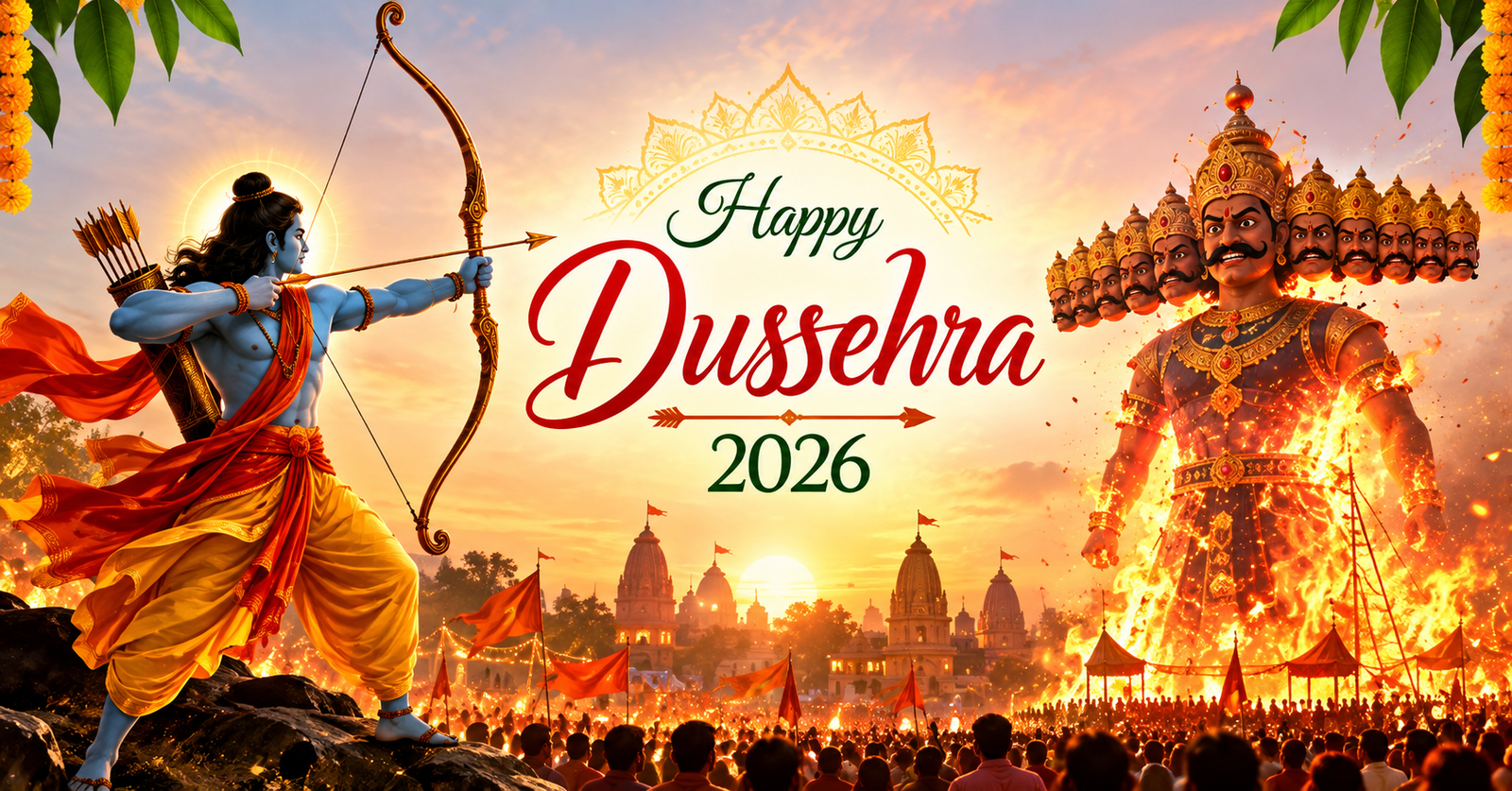

Dussehra is one of the most important Hindu festivals in India. It celebrates the victory of good over evil and reminds us that truth and righteousness always matter, even during difficult times. The festival is also known as Vijayadashami and is celebrated with prayers, cultural events, and the burning of Ravana’s effigy in many parts of the country.
For many families, this festival is more than a religious occasion. It is a time to remember the values of Lord Rama, seek blessings from the divine, and begin a new chapter with hope and positivity.
When Is Dussehra in 2026?
In 2026, Dussehra will be celebrated on Tuesday, October 20, across most parts of India. It falls on the tenth day, known as Dashami, of the bright fortnight of the Ashwin month in the Hindu calendar.
According to the traditional Hindu calendar, this day is known as Vijayadashami. It marks the victory of Lord Rama over Ravana and is also associated with Goddess Durga’s victory over the demon Mahishasura.
You can check the festival date and regional puja timings on Drik Panchang.
What Is Dussehra?
Dussehra is a Hindu festival that symbolises the victory of good over evil. The word Vijayadashami is associated with victory, making the occasion a reminder that goodness, courage, and truth are worth standing up for.
The festival is celebrated in different ways across India. In northern and western parts of the country, people often celebrate the victory of Lord Rama by organising Ramlila performances and burning effigies of Ravana. In several eastern states, the day marks the conclusion of Durga Puja and celebrates Goddess Durga’s victory over Mahishasura.
Although the customs may differ, the central message remains the same: evil and injustice should never be allowed to overpower righteousness.
The Story Behind Dussehra
One of the most popular stories associated with this festival comes from the Ramayana.
Lord Rama was the prince of Ayodhya and was known for his honesty, courage, and commitment to dharma. When Ravana, the king of Lanka, abducted Sita, Lord Rama set out to rescue her with the help of Lakshmana, Hanuman, and the vanara army.
After a great battle, Lord Rama defeated Ravana and rescued Sita. This victory is remembered as the triumph of righteousness over arrogance and wrongdoing.
Ravana was a powerful and learned king, but his pride and actions ultimately led to his downfall. His story reminds us that knowledge and power mean little when they are not guided by wisdom and good character.
The burning of Ravana’s effigy during the festival represents the destruction of evil and the importance of choosing the right path.
The Significance of Dussehra
The deeper meaning of this celebration goes beyond the story of a battle. It encourages us to look at our own actions and understand the difference between right and wrong.
The festival teaches us several important lessons:
- Truth matters: We should remain honest even when telling the truth is difficult.
- Ego can lead to downfall: Pride can affect our decisions and relationships if we do not keep it in check.
- Courage is important: Standing up for what is right often requires patience and strength.
- Good actions matter: Our choices and behaviour define our character more than our position or power.
These lessons remain relevant in everyday life. Whether at home, at work, or in our relationships, choosing honesty and kindness can make a real difference.
How Is Dussehra Celebrated?
The celebrations vary from one region to another, but devotion and the spirit of victory are common themes.
Some of the most popular traditions include:
Ramlila performances: These theatrical performances tell the story of Lord Rama, from his early life to his victory over Ravana. They are especially popular in northern India.
Ravana Dahan: Large effigies of Ravana, and often his brother Kumbhakarna and son Meghnad, are burned in public gatherings. The event symbolises the victory of good over evil.
Temple visits and prayers: Families visit temples, offer prayers, and seek blessings for peace, prosperity, and success.
Shami leaf tradition: In parts of Maharashtra and other regions, people exchange Shami leaves as a symbol of prosperity and goodwill. The custom is also associated with the belief that the day is auspicious for new beginnings.
Ayudha Puja: In several southern states, people worship tools, vehicles, books, and work equipment as a way of expressing gratitude for the things that support their daily lives.
These customs reflect the many ways people express faith while keeping their cultural traditions alive.
Why Is Ravana Dahan Performed?
Ravana Dahan is one of the most recognisable traditions associated with the occasion. People gather to watch the effigies burn, often after days of Ramlila performances.
The ritual is not simply about celebrating Ravana’s defeat. It also serves as a reminder to recognise and overcome the negative qualities within ourselves, such as greed, anger, arrogance, and jealousy.
The message is simple: instead of focusing only on the mistakes of others, we should also work on becoming better human beings.
The Spiritual Message of Vijayadashami
The festival encourages us to reflect on the choices we make and the values we follow.
Lord Rama’s life is often remembered as an example of duty, discipline, compassion, and respect. His journey was filled with difficulties, yet he continued to stand by his principles.
Similarly, Goddess Durga’s victory over Mahishasura represents the strength of divine power against injustice and destructive forces.
Together, these stories remind us that challenges are a part of life, but we should not abandon our values when things become difficult.
Dussehra in Everyday Life
We do not need to wait for a festival to practise its teachings.
We can begin by being more patient with our family, keeping our promises, treating others fairly, and accepting our mistakes. We can also learn to control our anger and avoid letting pride damage meaningful relationships.
These may seem like small actions, but they help us bring the spirit of the festival into our daily lives.
Dussehra reminds us that personal growth begins when we recognise what needs to change within us.
Conclusion
Dussehra is a celebration of faith, courage, and the victory of good over evil. Through the stories of Lord Rama and Goddess Durga, the festival teaches us the importance of truth, humility, and standing up for what is right.
As we celebrate this auspicious day, let us remember that the real victory begins with our own actions. By letting go of negativity and choosing kindness, we can carry the spirit of Vijayadashami throughout the year.
May this Dussehra bring happiness, peace, strength, and prosperity to your home.
Happy Dussehra! Jai Shri Ram. 🌸
People Also Read : Ram Navami 2026: Sacred Story, Significance and Celebration of Lord Rama’s Birth