
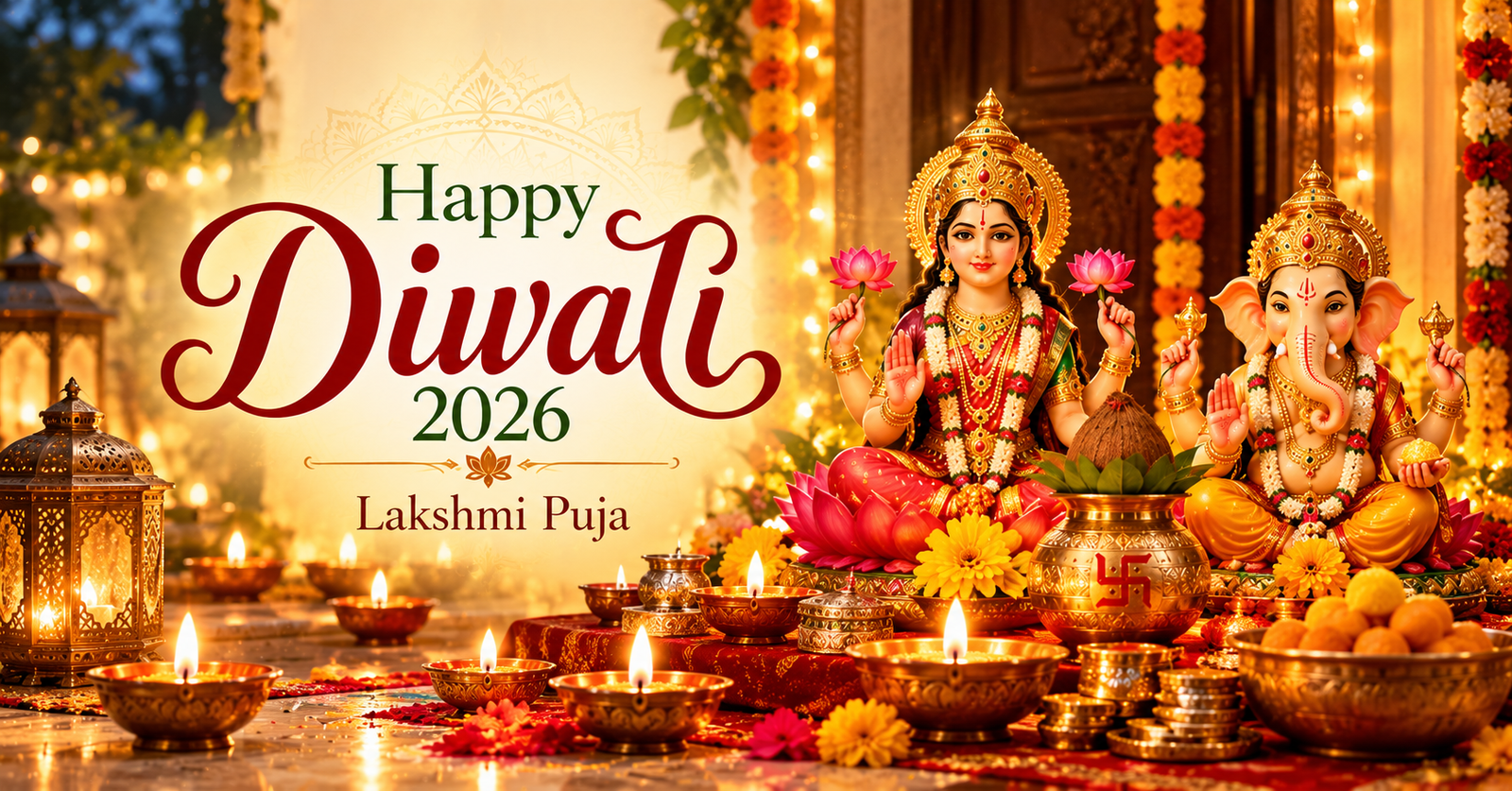

Diwali is one of the most loved festivals in India. Also known as Deepavali, the festival of lights brings families together to celebrate happiness, prosperity, and the victory of good over evil. Homes are decorated with diyas, rangoli, flowers, and lights, while families prepare sweets, exchange gifts, and worship their deities.
One of the most important traditions of this festival is Lakshmi Puja, performed to seek the blessings of Goddess Lakshmi, the goddess of wealth and prosperity. Lord Ganesha is also worshipped during the puja for wisdom, good fortune, and the removal of obstacles.
In this article, let us explore the Diwali 2026 date, Lakshmi Puja muhurat, religious significance, the story behind the festival, and how to perform the puja at home.
When Is Diwali in 2026?
Diwali, also known as Deepavali, will be celebrated on Sunday, November 8, 2026, across most of India.
The main celebration takes place on the Amavasya Tithi, or new moon day, of the Hindu lunar month of Kartik. On this evening, families light diyas, decorate their homes, perform Lakshmi-Ganesha Puja, and pray for happiness, prosperity, and peace.
The evening puja is traditionally performed during Pradosh Kaal, after sunset.
Diwali 2026 Lakshmi Puja Muhurat
The auspicious time for Lakshmi Puja varies by city because sunset and other Panchang calculations differ by location.
For example, the published Lakshmi Puja muhurat for Mumbai is approximately 6:28 PM to 8:28 PM on November 8, 2026. In New Delhi, it is approximately 5:54 PM to 7:50 PM.
For accurate timings in your location, consult the Drik Panchang Lakshmi Puja calendar.
Note: These are location-specific timings. Check the Panchang for your city before performing the puja.
What Is the Significance of Diwali?
The word Deepavali is commonly understood to mean a row or series of lamps. The festival is celebrated by lighting diyas and illuminating homes, streets, and temples.
The celebration carries different meanings across Indian traditions, but some of its most important themes are the victory of good over evil, hope over despair, and knowledge over ignorance.
Diwali is also associated with Goddess Lakshmi, who represents wealth, prosperity, fortune, and abundance. Families worship her to seek blessings for financial stability, happiness, and a peaceful home.
The festival has several important meanings:
- Prosperity and abundance: Lakshmi Puja expresses prayers for wealth, success, and financial well-being.
- The victory of good over evil: Traditional stories associated with Diwali celebrate the triumph of righteousness.
- New beginnings: Many families begin new financial accounts, business activities, or household plans around this time.
- Family and togetherness: People come together to share meals, exchange gifts, and celebrate with loved ones.
- Light and positivity: Lighting diyas symbolises hope, wisdom, and the removal of darkness.
Beyond the decorations and celebrations, the festival reminds us to bring kindness, gratitude, and positivity into our daily lives.
Why Is Goddess Lakshmi Worshipped on Diwali?
Goddess Lakshmi is one of the most widely worshipped deities in Hinduism. She is associated with wealth, prosperity, good fortune, beauty, and abundance.
According to Hindu tradition, worshipping Goddess Lakshmi during Diwali is considered auspicious. Families clean their homes, decorate their entrances, light lamps, and perform prayers to welcome prosperity.
However, wealth is not understood only in terms of money. A happy home, good health, loving relationships, peace of mind, and the ability to help others are also valuable blessings.
During Lakshmi Puja, devotees pray for these blessings and express gratitude for what they already have.
The Story Behind Diwali
Several stories are associated with Diwali, and the traditions vary across different regions of India.
Lord Rama’s Return to Ayodhya
One of the most popular stories connected with Diwali comes from the Hindu epic Ramayana.
According to the traditional account, Lord Rama returned to Ayodhya after spending fourteen years in exile and defeating Ravana, the king of Lanka. His wife, Goddess Sita, and his brother Lakshmana returned with him.
The people of Ayodhya were delighted to welcome their beloved prince home. According to the popular tradition, they illuminated their homes and streets with rows of oil lamps to celebrate his return.
This story is widely associated with the tradition of lighting diyas during Diwali. It represents the victory of righteousness, the return of hope, and the happiness of a community reunited with its beloved king.
The Story of Goddess Lakshmi
Goddess Lakshmi is also associated with the Samudra Manthan, or the churning of the cosmic ocean, described in Hindu mythology.
According to the legend, the devas and asuras churned the ocean to obtain divine treasures. During this event, Goddess Lakshmi emerged from the ocean and came to be revered as the goddess of wealth, fortune, and prosperity.
Her association with abundance makes her worship an important part of Diwali celebrations.
While the story of Lord Rama’s return explains one of the festival’s best-known traditions, Lakshmi Puja focuses on welcoming prosperity, expressing gratitude, and praying for well-being.
How Is Diwali Celebrated?
The celebration includes several customs that bring families together and create a festive atmosphere throughout the country.
1. Cleaning and Decorating the Home
Before Diwali, families clean their homes and prepare them for the celebrations. Entrances are decorated with rangoli, flowers, torans, and colourful designs.
Many people also hang decorative lights and arrange diyas around their homes.
Cleaning and decorating are traditionally associated with welcoming Goddess Lakshmi and preparing the home for a fresh beginning.
2. Wearing New Clothes
Many people wear new or traditional clothes for the evening puja and family celebrations.
Sarees, kurtas, lehengas, and other festive outfits are popular choices. Families may also buy new clothes for children or exchange gifts with relatives.
These traditions add to the excitement and joy of the occasion.
3. Performing Lakshmi-Ganesha Puja
Lakshmi-Ganesha Puja is one of the main rituals of Diwali.
Families prepare a clean puja space, arrange flowers and offerings, light a diya, and worship Goddess Lakshmi and Lord Ganesha. Some households also worship Goddess Saraswati and Lord Kubera according to their customs.
Devotees offer prayers for prosperity, wisdom, success, and the removal of obstacles. The exact puja procedure may differ depending on family traditions and regional practices.
4. Lighting Diyas and Candles
Rows of diyas are a familiar sight during Diwali.
Families place lamps near entrances, windows, balconies, and prayer rooms. Many also decorate their homes with electric lights.
The glow of these lamps represents hope, positivity, and the victory of light over darkness.
For a safer celebration, place diyas on stable, non-flammable surfaces and keep them away from curtains, decorations, and other materials that can catch fire.
5. Preparing Sweets and Sharing Gifts
Diwali is also a time for enjoying festive food and sharing happiness with others.
Families prepare or buy sweets such as laddoos, barfi, kaju katli, and other traditional delicacies. People exchange gifts with friends, relatives, neighbours, and colleagues.
Sharing food and gifts is a way of expressing affection, gratitude, and goodwill.
6. Celebrating with Family
Many families gather for dinner, visit relatives, offer prayers, and enjoy the festive decorations.
For some, the celebration also includes community events, temple visits, charitable activities, and cultural programmes.
Although customs differ, the spirit of togetherness remains an important part of the occasion.
Lakshmi Puja Vidhi: How to Perform the Puja at Home
The exact procedure may vary by family and region, but the following steps provide a simple overview of common Lakshmi-Ganesha Puja traditions.
Step 1: Clean the Puja Area
Clean the prayer space and arrange a clean cloth or platform for the deities. Decorate the area with flowers, rangoli, and other traditional items if desired.
Step 2: Arrange the Puja Samagri
Common puja items include:
- Idols or pictures of Goddess Lakshmi and Lord Ganesha
- A diya and cotton wicks
- Flowers and garlands
- Incense sticks
- Kumkum, turmeric, and rice grains
- Fruits, sweets, and other offerings
- A small vessel of water
- Coins or other items used in your family tradition
You do not need an elaborate arrangement to pray with sincerity. Follow your family’s customary practices and use the items that are available.
Step 3: Begin with Lord Ganesha
Many Hindu pujas begin with prayers to Lord Ganesha, who is worshipped as the remover of obstacles and the giver of wisdom.
Offer flowers and prayers according to your tradition.
Step 4: Worship Goddess Lakshmi
Offer flowers, sweets, and other customary offerings to Goddess Lakshmi. Some families recite Lakshmi mantras, Lakshmi Ashtottara, or other prayers.
Pray for prosperity, good health, happiness, and peace in your home.
Step 5: Light the Diyas and Perform Aarti
Light the lamps safely and perform the aarti according to your family tradition. Family members may join in singing devotional songs and offering prayers.
Step 6: Distribute Prasad
After the puja, distribute the offered sweets or prasad among family members. Many people then continue with their Diwali celebrations, share a festive meal, and spend time with loved ones.
This is a general guide, not a substitute for a specific family or regional puja paddhati.
What Is the Spiritual Meaning of Lakshmi Puja?
Lakshmi Puja offers an opportunity to reflect on the role of wealth and prosperity in our lives.
Money can provide comfort, security, and opportunities, but a meaningful life also requires honesty, responsibility, kindness, and good relationships.
The festival encourages us to welcome prosperity while remembering the importance of using our resources wisely. Helping people in need, treating others with respect, and expressing gratitude for our blessings are also ways to carry the spirit of the celebration into everyday life.
The light of a diya can serve as a reminder to choose wisdom over ignorance, kindness over anger, and hope over negativity.
How to Celebrate an Eco-Friendly Diwali
Diwali can be celebrated beautifully while also caring for the environment and the people around us.
Here are a few simple ideas:
- Use reusable decorations and traditional diyas where practical.
- Choose sweets and gifts with minimal packaging.
- Avoid excessive noise and smoke from firecrackers.
- Keep pets, young children, and elderly family members in mind when planning celebrations.
- Dispose of waste responsibly and avoid littering public spaces.
- Share food, gifts, or donations with people who may need support.
A thoughtful celebration can preserve the joy of the festival while making it more comfortable and inclusive for everyone.
Conclusion
Diwali is a festival of light, prosperity, devotion, and new beginnings. The traditions of lighting diyas, decorating homes, sharing sweets, and worshipping Goddess Lakshmi and Lord Ganesha bring families together in celebration.
As we celebrate Diwali 2026 on November 8, Lakshmi Puja offers an opportunity to express gratitude for our blessings and pray for happiness, health, and prosperity in the year ahead.
May Goddess Lakshmi bless every home with abundance, peace, and happiness, and may the light of Diwali bring hope and positivity into our lives.
People also read : Dhanteras 2026: Sacred Story, Significance and Puja Rituals