
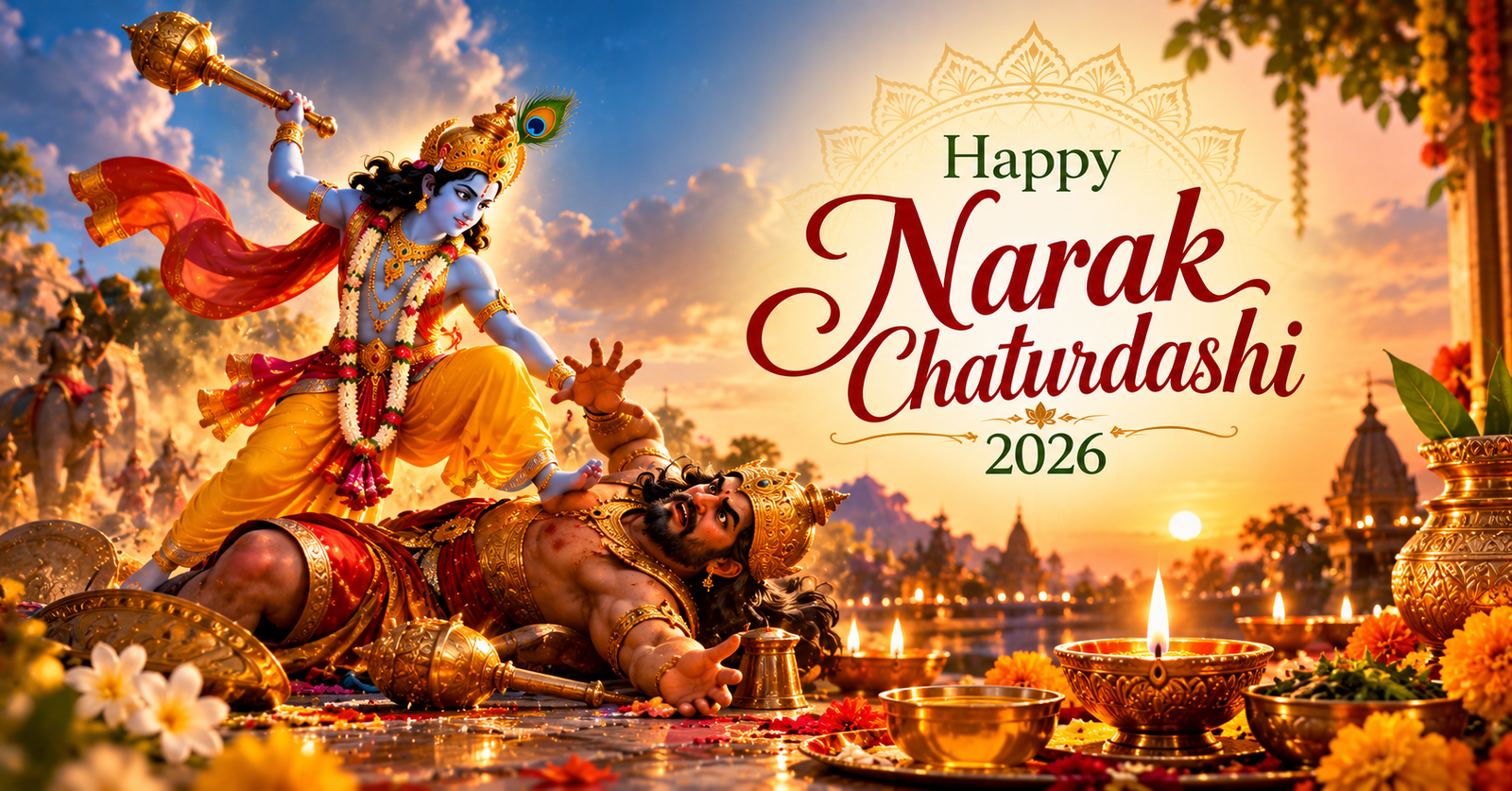

Narak Chaturdashi is an important Hindu festival celebrated just before Diwali. It reminds people of the victory of good over evil and the importance of removing negativity from life. The day is associated with Lord Krishna’s victory over the demon Narakasura and is observed with traditional rituals, early morning oil baths, prayers and the lighting of diyas.
Also known as Choti Diwali, this festival is an important part of the five-day Diwali celebration in many parts of India.
When Is Narak Chaturdashi in 2026?
Narak Chaturdashi will be celebrated on Sunday, November 8, 2026, across much of India. It falls on the fourteenth day of the waning lunar fortnight, known as Krishna Chaturdashi, in the Hindu month of Kartik.
The festival is observed according to the Hindu lunar calendar, so certain rituals and their timings may differ depending on the city and local traditions.
The most important ritual is Abhyang Snan, a traditional oil bath taken before sunrise. In Mumbai, the published timing for this ritual is approximately 5:42 AM to 6:42 AM on November 8, 2026. Check a local Panchang for the timings applicable to your location.
What Is Narak Chaturdashi?
Narak Chaturdashi is a festival that celebrates the defeat of Narakasura, a powerful demon in Hindu mythology. According to tradition, Narakasura had become arrogant and oppressive, causing suffering among people and celestial beings.
Lord Krishna fought against him and defeated him, restoring peace and freedom to those who had suffered under his rule. Some versions of the story also give an important role to Satyabhama in the battle.
The day represents the victory of righteousness over wrongdoing and light over darkness. It also encourages people to reflect on their actions and let go of negative habits.
The Story Behind Narak Chaturdashi
According to Hindu mythology, Narakasura was a powerful ruler who misused his strength and began troubling the gods and innocent people. He is also said to have imprisoned many women and taken valuable possessions from the celestial world.
Unable to bear his cruelty, the gods sought help from Lord Krishna. Krishna went to battle against Narakasura, accompanied by Satyabhama. After a fierce fight, Narakasura was defeated, and those held captive were freed.
In some traditional accounts, Satyabhama plays a decisive role in the demon’s death. The story is therefore remembered in different ways across Hindu traditions.
The victory brought relief and happiness to the people. It became a symbol of the triumph of good over evil and is remembered every year on this festival.
The story also carries a personal message. Just as Narakasura’s arrogance led to his downfall, pride, anger and selfishness can negatively affect our lives. The festival encourages us to practise humility, kindness and self-discipline.
Significance of Narak Chaturdashi
Narak Chaturdashi has religious, cultural and spiritual importance. Its traditions remind people to prepare for Diwali by welcoming positivity into their homes and lives.
1. Victory of Good Over Evil
The defeat of Narakasura symbolises the victory of truth and righteousness over cruelty and arrogance. It reminds us that power should be used responsibly and that harmful actions have consequences.
2. Cleansing and Renewal
The traditional early morning bath represents purification and a fresh beginning. Many families follow this custom as a way to welcome the festive day with a sense of cleanliness and renewal.
3. Importance of Light
Diyas are lit in homes and around entrances as part of the wider Diwali celebrations. Light represents hope, knowledge and positivity, while darkness is often associated with ignorance and negativity.
4. Preparing for Diwali
The festival is an important part of the Diwali period. Families clean and decorate their homes, prepare sweets, arrange festive items and spend time with loved ones.
Important Rituals of Narak Chaturdashi
Families follow different customs depending on their region and religious traditions. The following are some of the most common practices associated with the day.
1. Abhyang Snan: The Traditional Oil Bath
Abhyang Snan is one of the best-known rituals. People traditionally apply oil to their bodies before taking a bath early in the morning, before sunrise.
The ritual is associated with purification, well-being and the beginning of the festive day. In some regions, herbal pastes or ubtan are also used.
2. Wearing New or Clean Clothes
After the bath, many people wear fresh clothes and begin the day with prayers. Some families follow specific traditional customs passed down through generations.
3. Offering Prayers
Devotees offer prayers according to their family traditions. Lord Krishna is especially associated with the story of Narakasura’s defeat. In some regions, people also worship Goddess Kali or observe customs connected with Yama.
4. Lighting Diyas
Small oil lamps are placed near entrances, windows, courtyards and prayer spaces. The warm glow of diyas adds to the festive atmosphere and symbolises the arrival of light and positivity.
5. Preparing Festive Food
Families prepare sweets, snacks and traditional dishes to share with relatives and friends. The food and customs vary across India, making the celebration unique in different communities.
6. Celebrating with Family
Like other Diwali festivities, the day offers an opportunity to spend time with family, exchange greetings and prepare for the main celebration.
How Is Narak Chaturdashi Celebrated in Different Parts of India?
The festival has different names and customs across the country.
Maharashtra: The day is widely associated with an early morning Abhyang Snan. Families follow traditional bathing rituals, wear festive clothes and prepare for Diwali celebrations.
Goa: Narak Chaturdashi is especially known for Narkasur effigies. Local communities create large figures representing the demon and burn them before dawn, symbolising the destruction of evil.
South India: In several communities, Deepavali celebrations begin early in the morning on the day associated with Narakasura’s defeat. Oil baths, prayers, new clothes and festive food are common traditions.
Gujarat and other western regions: The day is observed as part of the Diwali festivities, with prayers, lamps and family gatherings. The name Kali Chaudas is also used in some traditions.
Although the customs differ, the central message remains similar: celebrate the victory of good over evil and welcome a fresh beginning.
Difference Between Narak Chaturdashi and Diwali
Narak Chaturdashi and Diwali are closely connected, but they have different significance.
Narak Chaturdashi remembers the defeat of Narakasura and is associated with purification and the Abhyang Snan ritual. Diwali, particularly Lakshmi Puja, is widely associated with welcoming Goddess Lakshmi, prosperity and good fortune.
In 2026, Narak Chaturdashi falls on November 8 in much of India. The date and observance of Lakshmi Puja should be checked against the local Hindu calendar, as regional traditions can affect the festival schedule.
You can also read our guide to Diwali 2026 for more about the festival’s significance and rituals.
A Simple Way to Celebrate Narak Chaturdashi
You do not need elaborate arrangements to observe the festival meaningfully. You can follow a few simple traditions:
- Begin the day with a traditional bath if it is part of your family custom.
- Clean and decorate your home.
- Light diyas in safe places around your home.
- Offer prayers according to your family tradition.
- Share sweets or a meal with family and friends.
- Reflect on habits you want to change and make a fresh start.
If you light diyas or use candles, keep them away from curtains and other flammable materials. Choose environmentally responsible celebrations and avoid excessive noise or smoke.
The Spiritual Message of Narak Chaturdashi
Beyond its rituals, Narak Chaturdashi encourages us to look within ourselves. The story of Narakasura reminds us that arrogance, greed and the misuse of power can lead to suffering.
The festival offers a chance to leave behind negative habits, practise kindness and approach life with greater awareness. Just as lamps brighten a dark room, good actions can bring positivity into our homes and communities.
As the Diwali season begins, this message encourages us to celebrate not only with lights and decorations but also with gratitude, compassion and responsibility.
Conclusion
Narak Chaturdashi is a meaningful festival that celebrates the victory of good over evil and the importance of purification and renewal. From the traditional Abhyang Snan to lighting diyas and spending time with family, its customs bring people together during the Diwali season.
As you celebrate Narak Chaturdashi in 2026, take a moment to reflect on its message: let go of negativity, choose kindness and make space for positive beginnings.
May this festive season bring peace, happiness and prosperity to you and your family.
People also read : Govardhan Puja 2026: Sacred Story, Significance and Puja Vidhi