
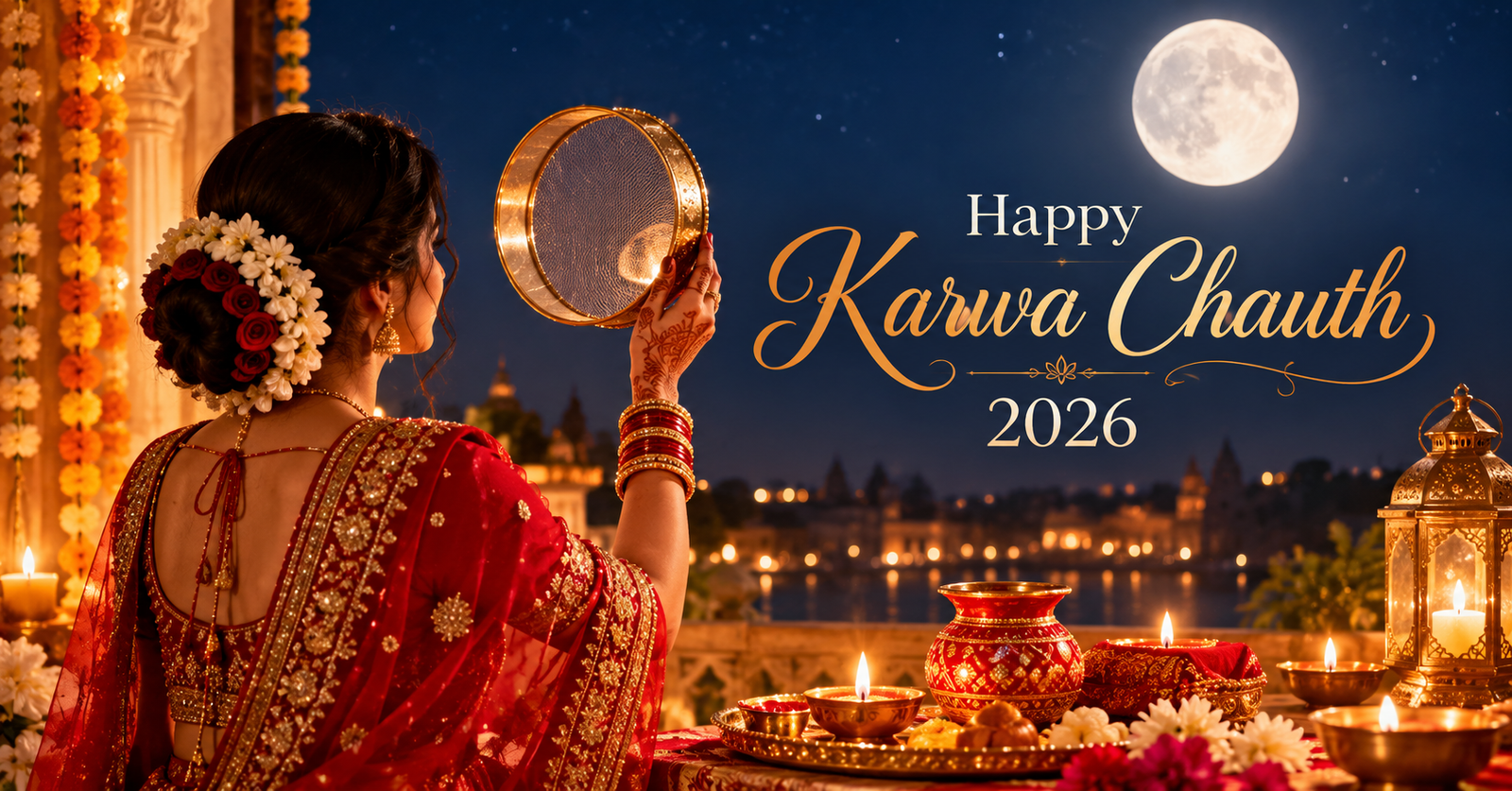

Karwa Chauth is a special Hindu festival that celebrates love, devotion, and the bond between married couples. On this day, many married women observe a fast and pray for the good health and long life of their husbands. The festival is known for its beautiful traditions, colourful outfits, mehendi, evening prayers, and the much-awaited sight of the moon.
Over the years, the celebration has also become a meaningful occasion for couples to express their love and spend time together.
In this article, let us explore the Karwa Chauth 2026 date, its significance, the traditional story, and how the festival is celebrated.
When Is Karwa Chauth in 2026?
In 2026, Karwa Chauth will be celebrated on Thursday, October 29, 2026.
The festival is observed on the Chaturthi Tithi of Krishna Paksha during the Hindu lunar month of Kartik. In some regional calendars, the month may be referred to differently, but the festival is observed on the same day.
The main rituals include the morning Sargi meal, evening puja, listening to the traditional vrat katha, and offering prayers to the Moon before breaking the fast.
For the exact puja muhurat and moonrise time in your city, check the Drik Panchang Karwa Chauth calendar.
Note: Puja timings and moonrise times differ from one city to another.
What Is the Significance of Karwa Chauth?
The festival holds deep cultural and spiritual importance in many Indian families. Traditionally, married women observe a day-long fast and pray for the long life, health, and happiness of their husbands.
However, the meaning of the occasion goes beyond fasting. It represents love, commitment, trust, and the willingness to pray for the well-being of a loved one.
Women often dress in traditional clothes, apply mehendi, decorate their puja thalis, and gather with family members or friends to perform the evening rituals.
Today, many couples also celebrate the occasion together, with husbands choosing to fast alongside their wives. This reflects the idea that love, care, and commitment are shared responsibilities in a relationship.
The Story Behind Karwa Chauth
Several traditional stories are associated with this festival. One of the most popular is the story of Veeravati.
The Story of Veeravati
According to a popular legend, Veeravati was a devoted wife who observed a fast for the well-being of her husband. She had seven loving brothers who could not bear to see her suffer from hunger and thirst throughout the day.
As evening approached, her brothers decided to trick her into believing that the Moon had risen. They created the appearance of moonlight using a light or fire from a distance.
Believing that the Moon had appeared, Veeravati ended her fast. Soon afterwards, she received the heartbreaking news that her husband had died.
Distressed by what had happened, she prayed with deep devotion and sought divine help. According to the legend, her sincere prayers and devotion eventually led to her husband’s life being restored.
The story is traditionally understood as a reminder of faith, devotion, and the importance of following the vrat rituals with sincerity.
The Story of Savitri and Satyavan
Another story often associated with devotion between husband and wife is that of Savitri and Satyavan.
According to Hindu mythology, Savitri displayed extraordinary courage and determination when Yama, the god of death, came to take Satyavan’s life. Through her wisdom, devotion, and persistence, she persuaded Yama to grant her a boon that ultimately allowed Satyavan to live again.
Although this story is not the main Karwa Chauth vrat katha in every tradition, it is remembered as an example of love, courage, and unwavering determination.
How Is This Festival Celebrated?
The celebration follows a series of traditional rituals that begin early in the morning and continue until the Moon is visible at night.
1. Sargi Before Sunrise
Sargi is a special meal traditionally prepared or given by the mother-in-law to her daughter-in-law. Women eat it before sunrise, before beginning their fast.
The meal may include fruits, dry fruits, sweets, and other homemade dishes. It provides nourishment for the day ahead.
The exact customs and food items can vary between families and regions.
2. Observing the Fast
After the morning meal, women begin their fast. Traditionally, the fast continues from sunrise until moonrise, without food or water.
Some women follow different practices depending on their health, family customs, or personal circumstances. The ritual should be approached with care, and anyone with a medical condition or health concern should seek appropriate medical advice before undertaking a strict fast.
3. Getting Ready for the Evening Puja
As evening approaches, women often dress in traditional attire such as sarees or suits. Red, maroon, pink, and other festive colours are popular choices.
Many apply mehendi, wear bangles, and prepare a decorated puja thali containing items needed for the evening prayers.
The festive atmosphere brings families and friends together and gives the day a sense of celebration.
4. Performing the Puja and Listening to the Vrat Katha
In the evening, women gather to worship Goddess Parvati, Lord Shiva, and Lord Ganesha according to their family traditions.
The Karwa Chauth vrat katha is recited or heard during the puja. Women may also exchange thalis and participate in traditional songs and prayers.
A karwa, or small pot traditionally made of clay or metal, is an important part of the rituals. It is associated with the offering of water during the ceremony.
5. Moon Sighting and Breaking the Fast
The sighting of the Moon is one of the most anticipated moments of the day.
Traditionally, women look at the Moon through a sieve, offer water to it, and then look at their husbands through the sieve. In many families, the husband offers his wife water and a bite of food to help her break the fast.
These customs may differ across regions and households, but the moment is widely associated with love, prayer, and togetherness.
The Spiritual Meaning of the Rituals
The traditions of this festival carry meanings that go beyond the ceremonies themselves.
- Fasting: Represents discipline, faith, and devotion.
- Prayers: Express wishes for health, happiness, and well-being.
- The karwa: Symbolises the traditional offering of water and forms an important part of the puja.
- Moon worship: Marks the completion of the day’s fast in the traditional observance.
- Family gatherings: Strengthen bonds and help pass cultural traditions from one generation to the next.
These practices have been followed for generations, with customs changing in different regions and families.
How Karwa Chauth Is Celebrated Today
While many families continue to follow traditional rituals, the celebration has evolved with changing lifestyles.
Some couples observe the fast together, while others celebrate by exchanging gifts, sharing a special meal after moonrise, or spending quality time with each other.
Social media has also made festive outfits, mehendi designs, puja thalis, and family celebrations popular ways of sharing the occasion.
Despite these changes, the central themes remain the same: love, commitment, prayer, and care for one’s partner.
It is also important to remember that religious observances are personal. The value of a relationship is not measured by whether someone fasts, and couples can express love and commitment in many different ways.
The Message of Karwa Chauth
At its heart, the festival reminds us to value the people who stand beside us in life.
Marriage is built on trust, understanding, patience, and mutual respect. While the traditional fast is an expression of devotion for many women, the broader message can be appreciated by everyone: relationships grow stronger when both partners care for each other’s happiness and well-being.
The day can be an opportunity to pause, express gratitude, and celebrate the bond shared with a life partner.
Conclusion
Karwa Chauth is a cherished Indian festival that brings together faith, family traditions, and the celebration of love. From the early morning Sargi to the evening puja and the sight of the Moon, each ritual holds a special place in the hearts of those who observe it.
As we celebrate Karwa Chauth 2026 on October 29, the occasion offers a reminder that lasting relationships are nurtured through love, trust, respect, and care.
May this festival bring happiness, peace, and togetherness to every family celebrating it.
People Also Read : Dussehra 2026: Sacred Story, Significance and Celebration of Vijayadashami